
Bio#
How do animals navigate a complex and unpredictable world — flexibly deciding how to respond to ever-changing sensory inputs? How variable is this decision-making across a population, or within a single individual over time?
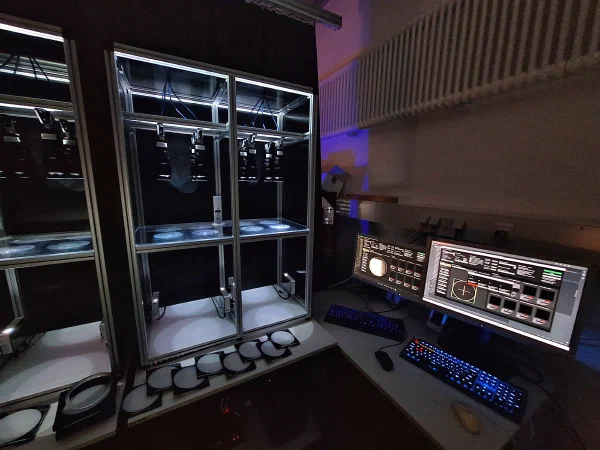
To address these questions, I study the optomotor response — a well-defined behavioral response to whole-field visual motion — in larval zebrafish. Using high-throughput live tracking, I measure how individual larvae respond to visual stimuli across repeated trials. I find that animals switch between distinct behavioral states (swimming with or against the motion, or not strongly responding) and that the frequency of these states differs reliably between individuals.
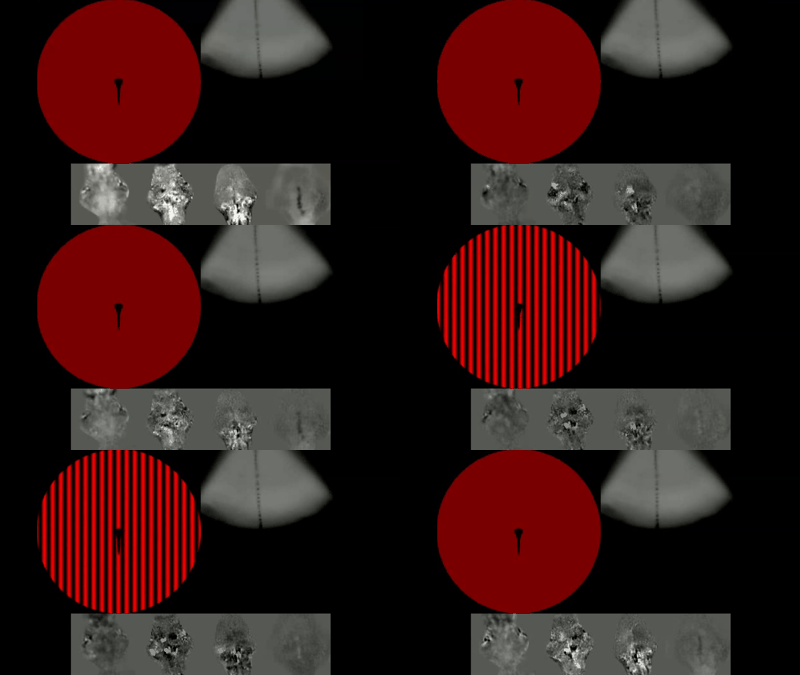
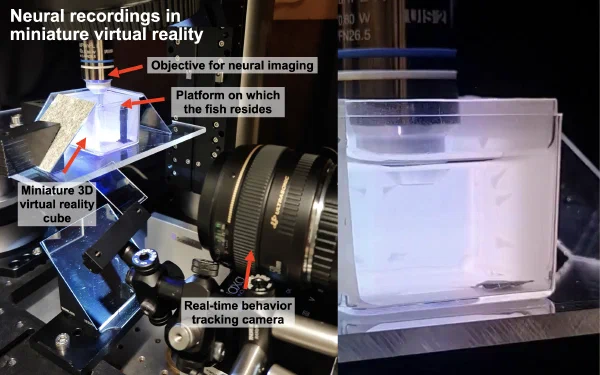
I am now bridging brain and behavior using light field imaging in tail-free larvae to capture whole-brain neural dynamics underlying this flexibility. Together, this work aims to reveal how the brain transforms sensory input into motor output in a state-dependent manner.
Projects#
Methods#
Thesis#
CV#
Positions
Education
Publications#
2025
- Thakur D., Hunt S., Tsou T., Petty M., Rodriguez J. M., Montell C. (2025) Control of odor sensation by light and cryptochrome in the Drosophila antenna. iScience. https://doi.org/10.1016/j.isci.2025.112443
- Mearns D. S., Hunt S. A., Schneider M. W., Parker A. V., Stemmer M., Baier H. (2025) Diverse prey capture strategies in teleost larvae. eLife. https://doi.org/10.7554/elife.98347.2
2022
- Boehm A. C., Friedrich A. B., Hunt S., Bandow P., Siju K., Backer J. F. D., Claussen J., Link M. H., Hofmann T. F., Dawid C., Kadow I. C. G. (2022) A dopamine-gated learning circuit underpins reproductive state-dependent odor preference in Drosophila females. eLife. https://doi.org/10.7554/elife.77643