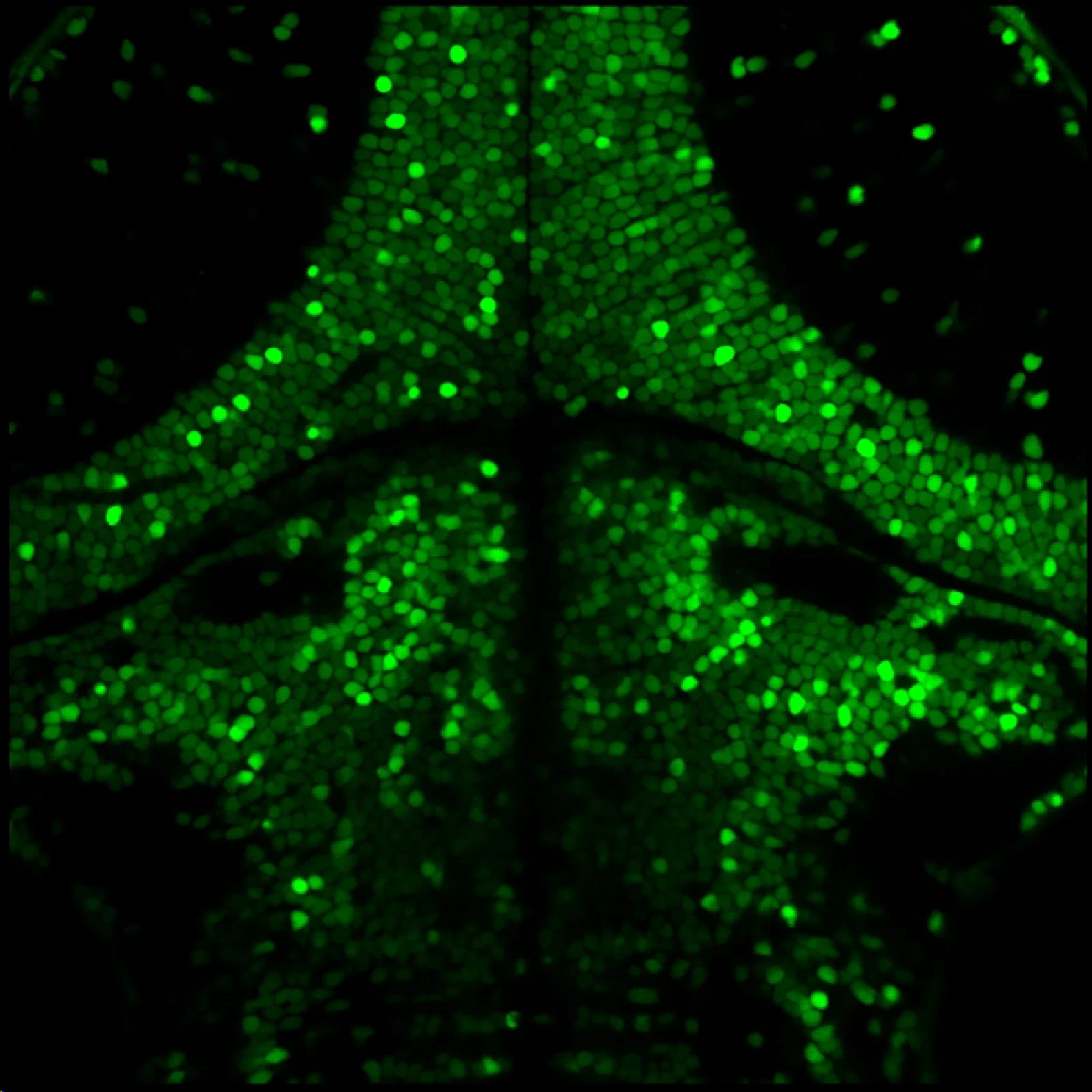

Bio#
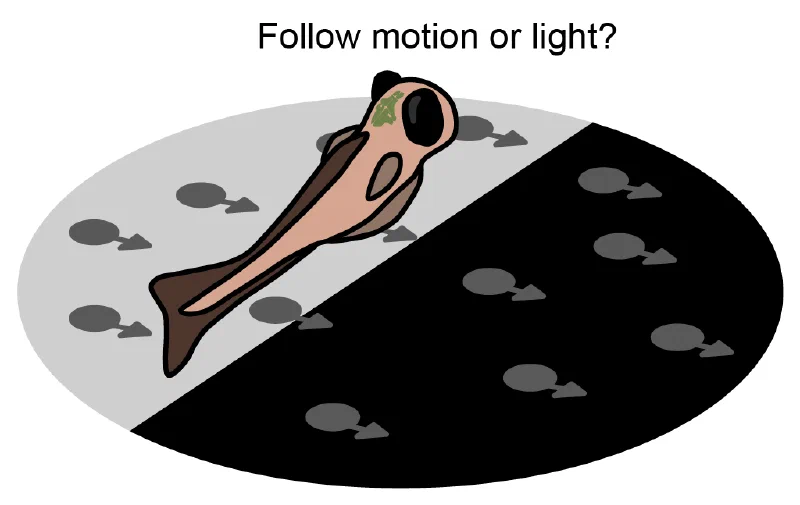
How does the brain transform sensory inputs into useful behaviour? I am interested in this question in the context of decision-making. Animals continuously receive sensory cues from the environment. Sometimes these cues line up and make it easy to decide on the next action. But often sensory cues conflict - one thing telling the animal to go left and another to go right. How are such cues combined in our brain? Which algorithms are used to integrate the sensory information? And what are the neural circuits that implement these algorithms?
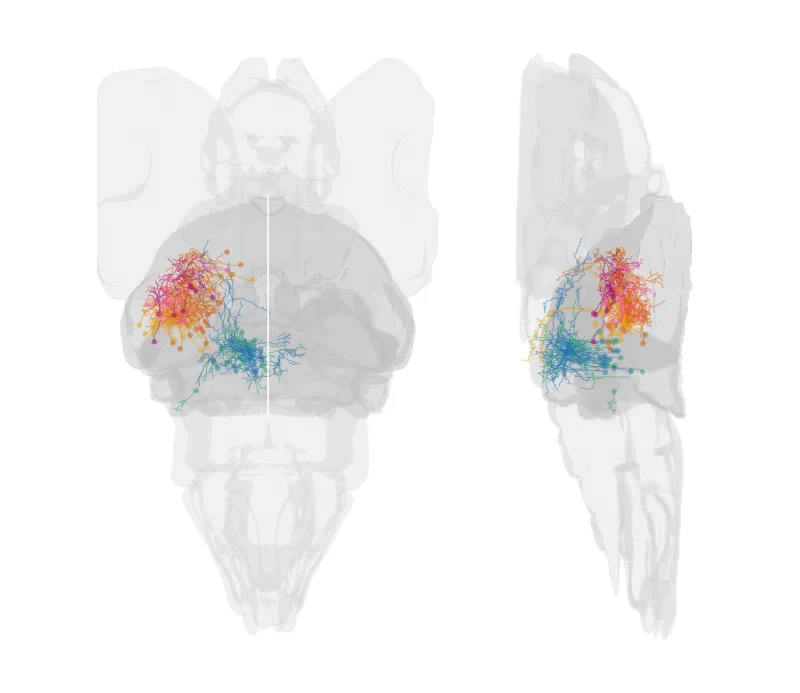
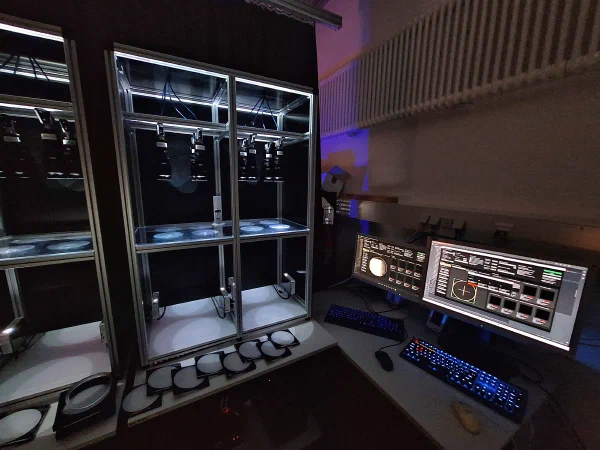
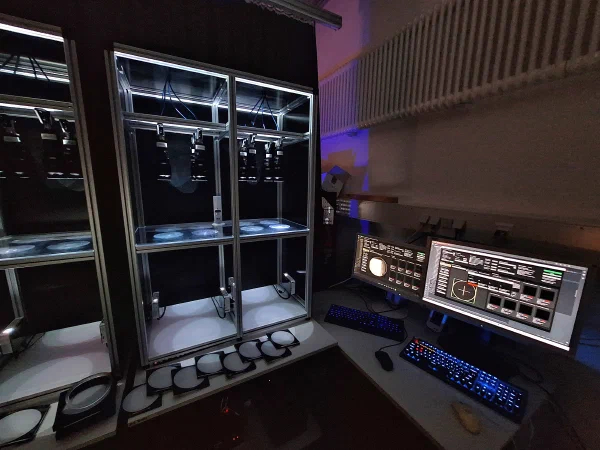
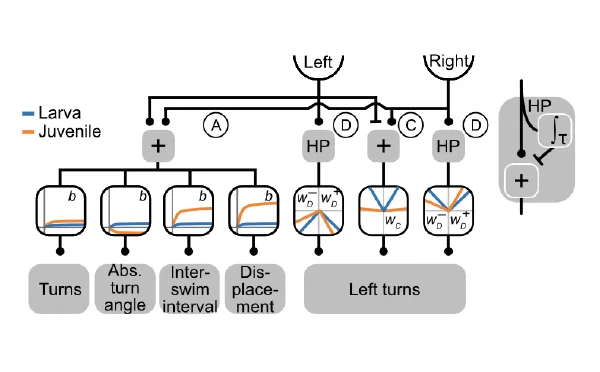
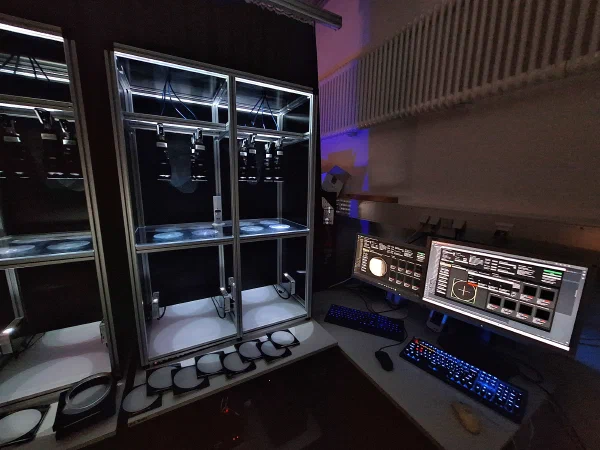
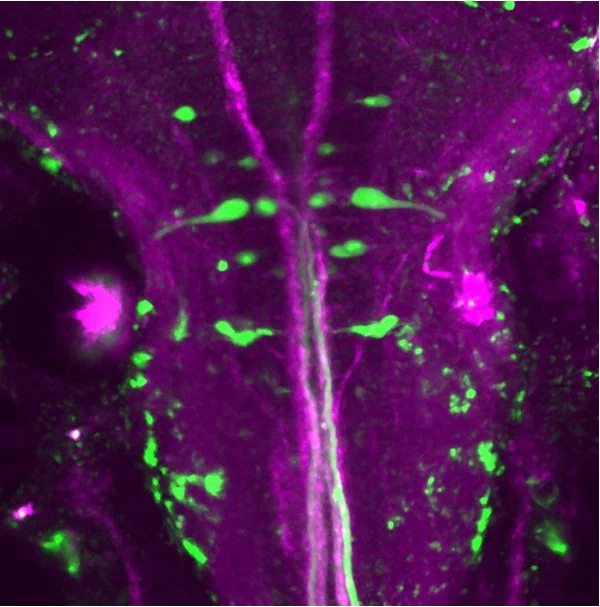
I am trying to answer these questions using a variety of methods available in the larval zebrafish. From quantitative behavioral analyses, to computational modelling, two-photon calcium imaging, and anatomical tracings of neural morphology. Together these perspectives highlight how larval zebrafish extract multiple features from visual scenes containing motion and luminance cues. The fish temporally integrate motion and luminance, and also compute the absolute change in luminance. They then linearly add these three visual features to guide the direction of their next swim bout. The integration of visual features appears in the anterior hindbrain, a brain region at the boundary of the sensori-to-motor transformation. The anatomy of the involved neurons suggests a parallel and spatially distinct pathway of each feature into the anterior hindbrain neurons which integrate information. This gives a first glimpse into the neural circuitry underlying visual information integration for decision-making.
When I am not in the lab you can find me somewhere hiking or running in the mountains, trying to jump as high as I can, or playing boardgames with friends.

Projects#

Methods#
Thesis#
CV#
Positions
Education
Fellowships
Awards
Publications#
2026
- Slangewal K., Aimon S., Capelle M. Q., Kämpf F., Naumann H., Slanchev K., Baier H., Bahl A. (2026) Visuomotor decision-making through multifeature convergence in the larval zebrafish hindbrain. Nature Communications. https://doi.org/10.1038/s41467-026-69633-4
2025
- Klusmann F. S., Kögler A. C., Slangewal K., Önder O., Naumann H., Marx A., Bahl A., Müller P. (2025) An RNA ligase shapes transcriptional profiles, neural function, and behaviour in the developing larval zebrafish. https://doi.org/10.64898/2025.12.01.691575
- Slangewal K., Aimon S., Capelle M. Q., Kämpf F., Naumann H., Baier H., Slanchev K., Bahl A. (2025) Parallel and convergent pathways for multifeature visual processing in larval zebrafish sensorimotor decision-making. https://doi.org/10.1101/2025.08.12.669772
- Capelle M. Q., Slangewal K., Eleftheriadis P. E., Bahl A. (2025) Behavioral algorithms of ontogenetic switching in larval and juvenile zebrafish phototaxis. https://doi.org/10.1101/2025.06.13.659371
- Reynolds P., Marchi D., Ling Y. T., Slangewal K., Capelle M., Chalakova Z., Bahl A., Hindges R. (2025) Early visual experience elicits cellular and functional plasticity in the retina and alters behaviour. https://doi.org/10.1101/2025.04.29.651180
2022
- Kappel J. M., Förster D., Slangewal K., Shainer I., Svara F., Donovan J. C., Sherman S., Januszewski M., Baier H., Larsch J. (2022) Visual recognition of social signals by a tectothalamic neural circuit. Nature. https://doi.org/10.1038/s41586-022-04925-5
2021
- Kappel J. M., Slangewal K., Förster D., Shainer I., Svara F., Januszewski M., Sherman S., Baier H., Larsch J. (2021) Visual recognition of social signals by a tecto-thalamic neural circuit. https://doi.org/10.1101/2021.08.17.456614